I’ve taken to skating the lake. It’s been a winter with minimal snow, so here in Minnesota the ground is brown instead of white. Normally I’d be celebrating the season with nordic skiing or snowshoeing, but that hasn’t been an option so far this winter season. This winter, it has been tempting to bemoan the lack of snow and stay inside, longing for spring. And that’s no way to spend one’s time. So this winter, I skate.
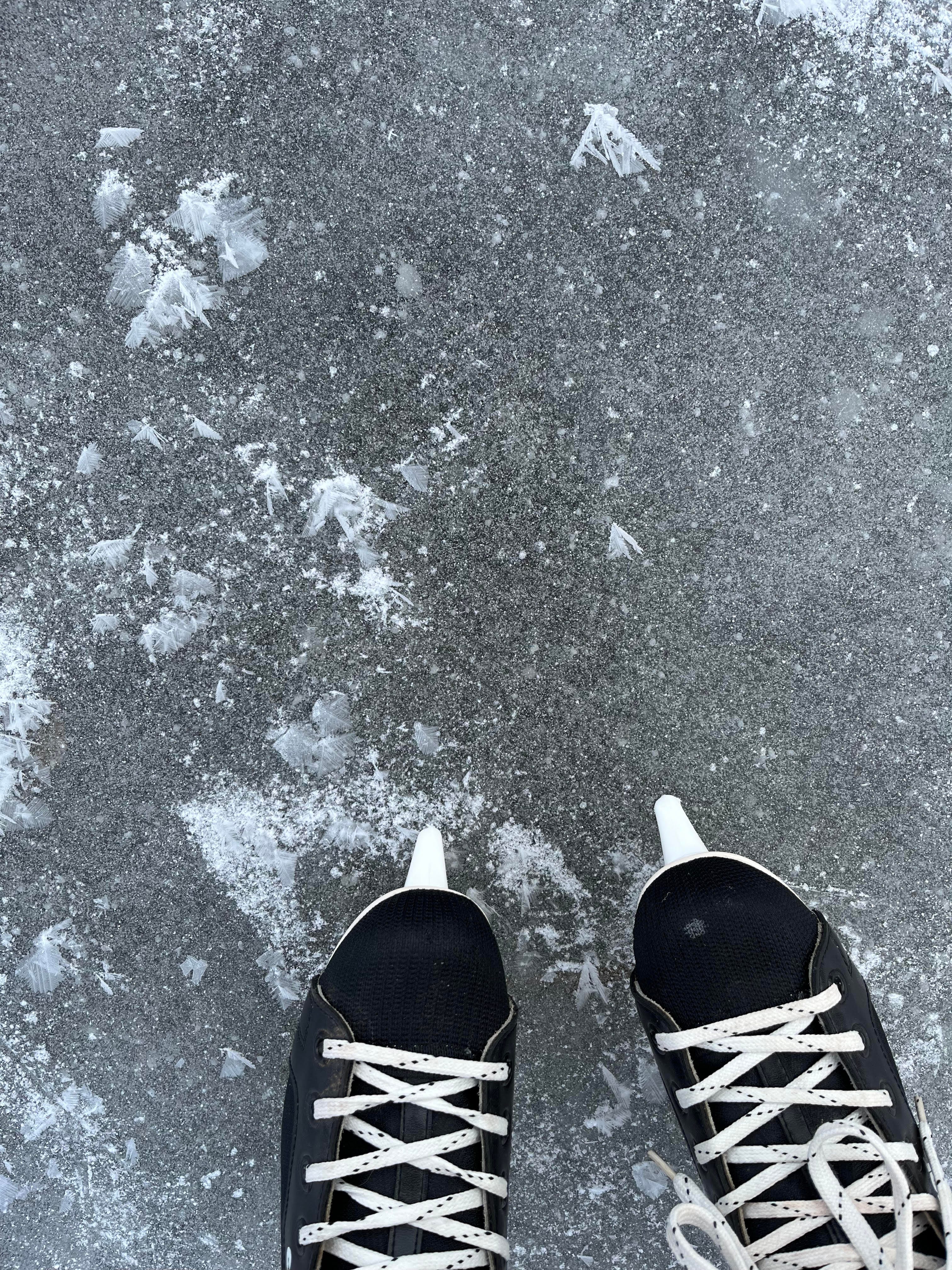
A childhood of annual treks across frozen cattle pastures to the river backwaters and cow ponds of the South Dakota prairie afforded me rudimentary skating skills, but the more I do it, the easier it is to get into a rhythm. Push, glide, push, glide, arms swinging in the same pattern, ice scraping underfoot, a cold wind usually threatening to push back my jacket’s hood. I won’t be joining the Dutch speed skating team any time soon, but I have been able to build up the capacity to stay upright most of the time and pay attention to the details that aren’t usually visible this time of year when there’s snow. The lake out back is about 30 acres, so it’s not huge as lakes go, but it’s big enough to get lungs working and legs moving during a midday lunch break. And there is plenty to notice.
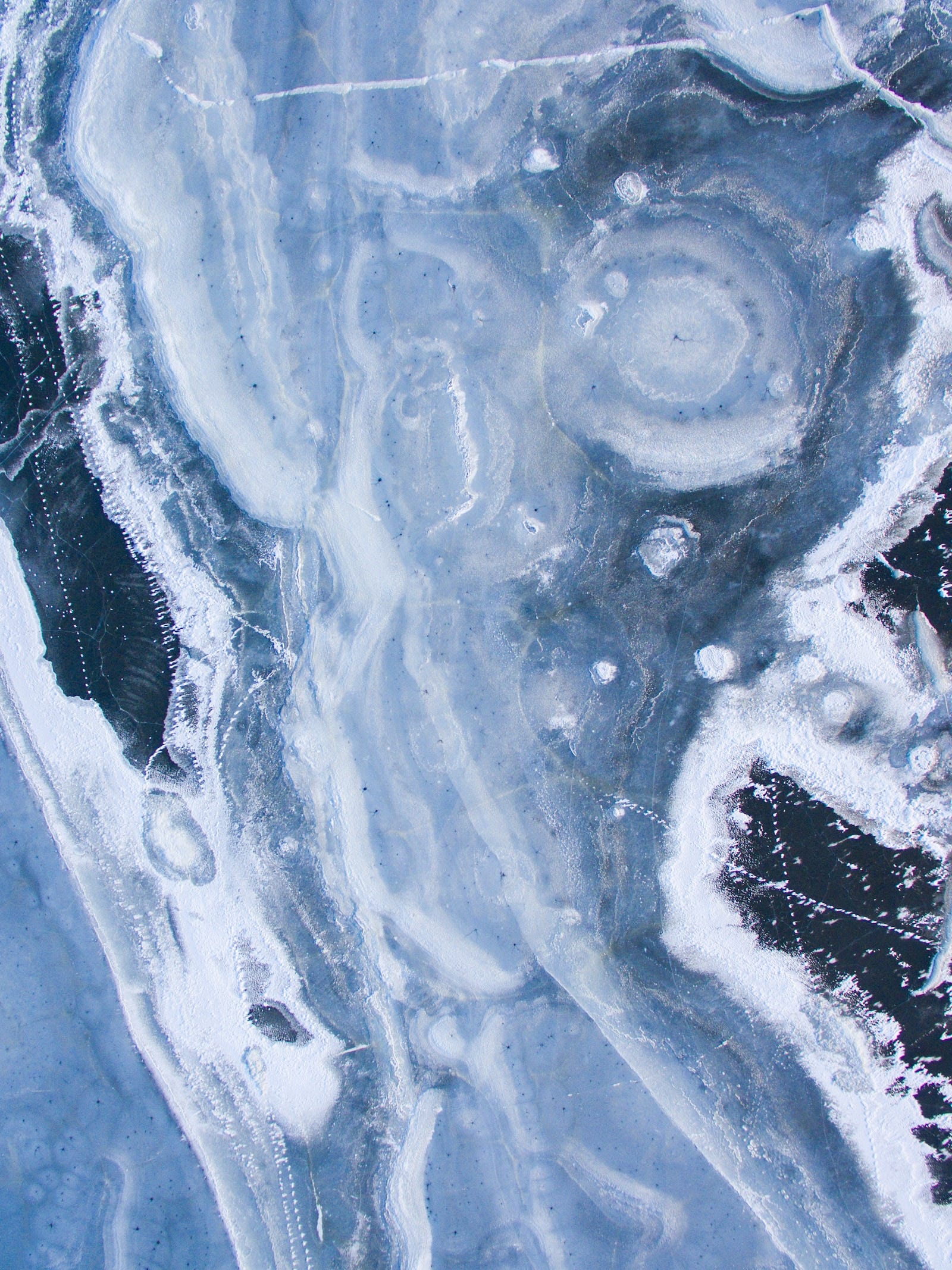
The pattern these past years has been a combination of bitterly cold peppered with a few days above freezing, so around the perimeter of the lake, the ice looks like frozen milk after all the freeze/thaw/freezing it’s been through. Cracks and splits criss cross the surface, a road map of temperature change and exposure. On the days when the sun comes out, you can hear the ice booming from inside the house, a reminder that even something that seems as solid as 12 inches of ice on a sub-zero day needs to sing its own tune. And when you are standing in the middle, the conversations of the lake swirl around in a different language than any other time of year. The insistent cracking, the gallant booming of ice, the skittish wind flirting with the glassy surface, the way the hawk’s cry echos in a different key. I find I must be outside, noticing what there is to notice. Even though it’s cold, it’s what my soul tends to want on these dark days in January. As Mary Oliver wrote, “the soul exists and is built entirely out of attentiveness.” Happening upon a yellow maple leaf preserved just under the surface or watching an aquatic plant of vibrant green dance under a clear patch of thick ice or witnessing a mouse speed on tiny legs from one bunch of reeds to another adds a layer of buoyancy to even the weariest of souls. And we all know that souls in the depths of winter can feel heavy.

Mary Oliver died January 17, 2019. She was 83, and during her life she was an inspiration to many. Six years after her death, her love of nature and her willingness to share simple noticings continues to provide hope, comfort, and healing for countless individuals. The last sentence of Winter Hours, a collection that Oliver published in 1999, reads, “Weary and sleepy, winter slowly polishes the moon through the long nights, then recedes to the north, its body thinning and melting, like a bundle of old riddles left, one more year, unanswered.” Attentiveness doesn’t always mean figuring out the answer, just like winter doesn’t always mean snow. But even if the answer isn’t clear, or things aren’t going how you thought they should go, paying attention is always an option. Noticing, in whatever capacity you have to notice, is always available.
We have missed Mary Oliver’s voice providing new insight these past six years, but we can continue to honor her work by taking her advice. She wrote, “Instructions for living a life: Pay attention. Be astonished. Tell about it.” So, all of you lovers of wild nature, keep going outside, even when it’s cold. Notice the way ice cracks in the sun. Notice the burst of red when a cardinal visits your bird feeder. Notice how cold air reminds you to how it feels to be alive, even when it isn’t comfortable. Build your capacity for attentiveness, practice paying attention, and then give voice to the bits of astonishment that gather in the wake of doing so. Be attentive to the way winter polishes the moon, and give in to wonder. Because the world needs us to keep wonder alive.
 Heidi Barr | Author